AstronauticsNow.com/aste520 ASTE520 Spacecraft Design
Spacecraft
System
Design
ASTE 520
Frequently asked questions MS ASTE

ASTE 520 in Fall 2010 semester:
all course materials will be posted
on the class web site at DEN
in mid August.
In the
meantime,
you can get some information about the course
from the first lecture in Spring 2009 semester:
ASTE 520 First lecture and detailed information
In
20092010 academic year,
ASTE520 Spacecraft Design
was offered in both semesters, fall 2009
(Monday, 6:309:10 pm)
and
spring 2010
(Friday, 5:007:40 pm).
I anticipate exactly the same scheduling arrangement and unlimited course enrollment for the next (20102011) academic year.
Course
webcasts. All lectures are available as webcasts through VSOE's
Distance Education Network DEN to all
students enrolled in the course during the entire semester.
PC or Mac. DEN streams course videos using Microsoft Windows media encoders and servers. While streaming windows media files are supported by both the latest Mac and PC operating systems, using a Windows based system will usually provide a better experience. Additionally, DEN has recently added video download capabilities using Microsofts Digital Rights Management supporting Windows operating systems.
Instructor:
Mike Gruntman (detailed
bio)Mike Gruntman's web site on
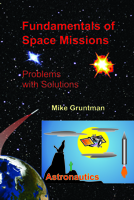
Astronautics and Spacecraft DesignRecommended books (textbooks and monographs) on Astronautics, Spacecraft Design, and Spacecraft Systems
USC Department of Atronautical Engineering (formerly known as Astronautics and Space Technology Division) offers BS, BS Minor, MS, Engineer, and PhD Degrees in astronautical engineering; Graduate Certificate in astronautical engineering
Frequently asked questions FAQ
Master of Science in Astronautical Engineering
For fun: Sputnik 1 Explorer 1 Vanguard 1
Special lecture (free download) 1 hr 10 min
The Road to Space. The First Thousand Years.Fifty years ago in October of 1957, the first artificial satellite of the Earth was launched into space.
The lecture focuses on the history of the events that led us to the space age.Special lecture (webcast)
Space: From Firecrackers to Interstellar FlightPart 1. The First Thousand Years (webcast 87 min)
Part 2. Space in 21st Century (webcast 84 min)
Short courses: space systems and space missions
Video clips of interest to space mission design and to spacecraft design
Space Mission Design and Spacecraft Design
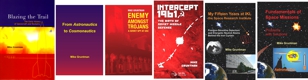
Mike's book Blazing the Trail. The Early History of Spacecraft and Rocketry (published by AIAA in 2004) received the Luigi Napolitano Award from the International Academy of Astronautics (IAA) in 2006.
From Astronautics to Cosmonautics book published in 2007
About the Course ASTE 520
Spacecraft System Design course (ASTE 520) is offered by the USC Department of Astronautical Engineering (ASTE) (formerly known as Astronautics and Space Technology Division).
This class is usually taken by astronautical engineering, aerospace engineering, and other science and engineering graduate students.
This class is a core requirement for the degree Master of Science in Astronautical Engineering (code ASTE).
Frequently asked questions Master of Science in Astronautical Engineering
The class is a broad introduction into fundamentals of space systems, main spacecraft subsystems, and their interplay.
This class is a must for science and engineering students,
regardless of their major, considering careers in the space industry
and government space research and development centers.
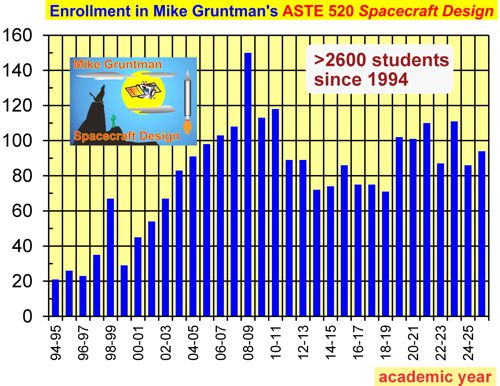
This is a very popular class, perhaps the largest graduate class on fundamentals of space systems in the United States.
Instructor: Professor
Mike Gruntman
(detailed bio)
In academic years 20082009 and 20092010, the course was offered in both semesters, fall (Monday, 6:309:10 pm) and spring (Friday, 5:007:40 pm). I anticipate exactly the same scheduling arrangement and unlimited course enrollment in the next 20102011 academic year. Always check the class schedule with ASTD Student Affairs.
ASTE 520 is webcast and available through the USC Distance Education Network (DEN). DEN classes are taken by students pursuing graduate degrees (especially Master of Science) anywhere in the United States. In 20052010, students from 1014 states of the United States enrolled each year in Mike's ASTE 520.
Many our students work full time in major space companies and space government research and development centers (Aerospace Corporation, NASA Jet Propulsion Laboratory, Lockheed-Martin, Northrop-Grumman, Boeing, UT, Space and Missiles Systems Center, etc.), in small companies, and are on active duty. There is growing enrollment into the astronautical engineering program of students not affiliated with companies (on an individual basis).
More information on the history, focus, and organization of the USC Astronautics program
To get more information on ASTE520, other astronautics-related courses, USC graduate and undergraduate programs in Astronautical Engineering, and on DEN, please consult the astronautics web site at http://astronautics.usc.edu for contact information.
Frequently asked questions Master of Science in Astronautical Engineering

Awarded (annual) Master's degrees in Astronautical Engineering

Course Outline
Organization of the class.
Introduction. History of space exploration. Units.
Universe, galaxy, solar system. Introduction to plasma.Space environment. Hardness.
Space mission geometry; astrodynamics.
Orbit design. Basic orbits, perturbations, delta-V.
Spacecraft and mission design overview. Operations, launching facilities. Reliability.
Guidance, navigation and control; attitude determination; reaction control system.
Global Positioning System.Propulsion. Launch systems.
Introduction to communications; antennas.
Communication link.
TT & C; data handling.
Electric power systems.
Thermal control.
Structures and mechanisms.
Only for Students enrolled in Mike's ASTE 520
REQUIRED CLASS NOTES
Class Notes (800+ pages) are essential and mandatory to the course.
The notes are available for download at DEN's web site of ASTE520 in the beginning of the semester.
Start with reading the "readme.pdf" file for instructions.
Usually, the full set of notes is ready before the first class meeting. The full set of homework assignments will also be available by that time, or at the latest by the end of the first month of the semester.
To access the class web site at DEN, all students enrolled in the class (including all on-campus students) must register with DEN.
Note that the notes are protected with password that can be obtained only from the instructor by returning the student survey form.
The survey is in Section 00 of the class notes. This section (see the first lecture link below) is not password-protected.
Please, download the first lectures (00, 01, 02) before the first class meeting.
Space Mission Analysis and Design, ed. W.J. Larson and J.R. Wertz,
Kluwer Academic Publishers and Microcosm, 2nd or 3rd Edition.
The book is available in the softcover edition. The price should be $5060.
A convenient way to obtain the book is to purchase it directly from the publisher.Many other textbooks and monographs recommended by the instructor
on various aspects of astronautics and space technology are listed at
http://astronauticsnow.com/AstroBooks/
Homework
There are 3036 homework assignments.
Late homework is graded with grades reduced by a 50% factor.
Grading policy for ASTE 520 (subject to change)
40% Midterm
40% Final
20% Homework
Mike Gruntman's web site (500,000+ visitors since launch) on
Astronautics and Spacecraft Design
Privacy policy. Copyright © 20002010s by Mike Gruntman. All rights reserved.