
 –
Mike's books
–
Mike's books
astronauticsnow.com/tunneling/
Mike's space and rocket videos –
–
Mike's books
Preface – Tunneling Transition
Tunneling (effect) transition to the land of the free
Preface – Tunneling Transition
Tunneling (effect) transition to the land of the free
Many colleagues and friends asked me how I escaped the Soviet Union and reached the United States.
Here is part of the story about my "tunneling (effect)" transition to the land of the free and the home of the brave.
Excerpts from
My Fifteen Years at IKI, the Space Research Institute:
Position-Sensitive Detectors and Energetic Neutral Atoms Behind the Iron Curtain
Interstellar Trail Press, 2022. ISBN 979-8985668704
detailed book content paperback hardcover Kindle book preview
Preface
Tunneling (effect) transion (pp. vii-xvi)
If you ain’t the lead dog, the scenery never changes.
Lewis Grizzard
If they survive, the men who go first are rarely popular
with those who wait for the wind to blow.
R.V. Jones, Most Secret War
Dead tired, I walked slowly through poorly lit hallways at Schiphol. The main airport in the Netherlands looked deserted on that late evening in the middle of March 1990. I felt emotionally drained. Even my fear of the immediate future had practically disappeared.
The longest day of my life was coming to an end. Several hours ago, I said goodbye to my mother and brother, who saw me off at the Moscow international airport, Sheremetyevo. I was certain that I would never see them again. Formally, this day started my four-week vacation time, which I had saved up over the previous year. Only a few people, including my immediate boss and the overseeing institute deputy director, knew that I had also submitted resignation from my position of a staff scientist in the Academy of Sciences, effective on the last day of my "vacation." My journey had begun.
Security services still controlled people's lives in the Union of Soviet Socialist Republics, USSR. The country steadily grew unstable as the Communist Party promoted a Kremlin version of a kinder and gentler "socialism with a human face." Soviet leader Mikhail S. Gorbachev relentlessly emphasized a revitalized socialist choice. He strived to save both, a disintegrating empire and his Communist Party, relying on the ossified totalitarian cadres. Gorbachev tried to reform the one and only political party that had ruled the country for seventy years. The Soviet people remained, well, very much Soviet, with the inertia of fear dominating the national psyche. Many intellectuals, a large part of the intelligentsia, sincerely rationalized the lack of freedom (Fig. P.1).
The terrifying moment at the Moscow airport passport control had already faded into the past. Had the officers of the border guards turned only one more page of my international passport, they would have most likely confiscated my documents, and after a brief questioning ordered me to report to a security office the next day. Then, my plan B would have been to board a train that same day and head to Warsaw in Poland with my other internal Soviet passport [1]. Internal passports served as the main personal identification documents in the Soviet Union. A totalitarian state meant tight control of its subjects.] I counted on different bodies of the bloated repressive apparatus to communicate inefficiently and with delays in the absence of computers. A short time window should have allowed me to sneak out. The Rubicon had been crossed.
[1. Internal passports served as the main personal identification documents in the Soviet Union. A totalitarian state meant tight control of its subjects.]
To my physics colleagues, I later compared, jokingly, the process of leaving the Soviet Union to a tunneling transition. In quantum mechanics, potential walls, or barriers, confine a particle such as an electron to a certain location. There is a non-zero probability, however, that the particle would manage to reach the other side of the barrier even if its energy were smaller than the barrier height. (Physicist George Gamow explained alpha decay of atomic nuclei using this counterintuitive effect in 1928.) So, one day I had been trapped in Moscow; a few days later, fate washed me ashore in California.
I am not prepared to tell the details of my complex plan for this "tunneling transition" out of the country. Suffice it to say that my colleagues and friends, unnamed here, from six countries on three continents extended their help. Nobody said no when I asked for assistance. Some contributed to my cover story and invited me to visit them as a guest in their respective countries. A few supported me en route. Others contributed to my two backup plans, B and C, which, fortunately, I did not have to try. I am truly grateful to all of them. You know who you are and a few of you, not all, are part of the story in this book. Thank you again.
Passengers spread out on an almost empty plane on the uneventful Aeroflot flight from Moscow to Schiphol. After takeoff, I saw in the window the "socialist paradise" disappearing below into the evening darkness. A melody hummed in my head. It was the unofficial student "Hymn of Aerophysicists" of my aerospace faculty:
Our starship ascends straight up;
Small stars have lightened up in the blue sky;
Wave your hand [goodbye] to the country,
To a wise man in the Kremlin; [2]
Because we are [proudly] rocketing on our nozzle.
[2. another variant of the lines:
Wave your hand [goodbye] to the Earth, To a bald man in the Kremlin]
These words had taken a completely new meaning for me. "Wave your hand goodbye to a wise man in the Kremlin!" The shackles "the wise guys" put on me had been broken. I got out! Well, almost—I was still in Soviet airspace.
The bridges behind me had been burnt—I was leaving the country of my birth forever. To never turn back. I had lived in the communist Soviet Union for 35 years, the first 10 years in Central Asia [3], including at the Tyuratam Missile Test Range (also known as the Baikonur Cosmodrome), and then 25 years in Podlipki, near Moscow (Fig. P.2). Practically all my professional life, more than 15 years, had been in the Space Research Institute of the USSR Academy of Sciences.
[3. Gruntman, 2004, pp. 312-315; Gruntman, 2019; Smith, 2021, p. 50 (web version)]
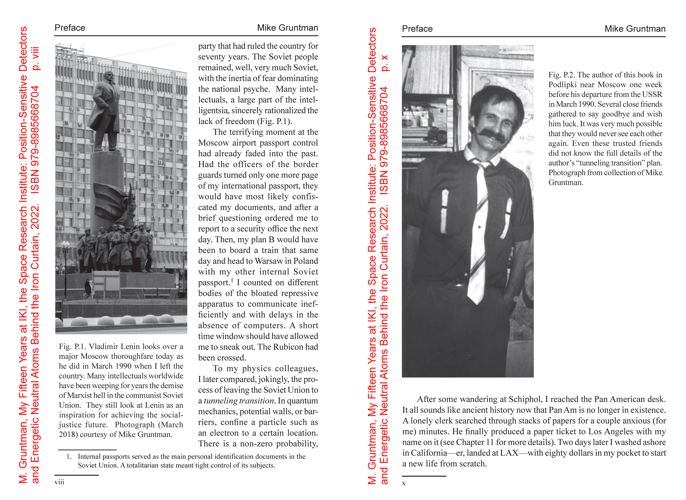
Fig. P.1. Vladimir Lenin looks over a major Moscow thoroughfare today as he did in March 1990 when I left the country. Many intellectuals worldwide have been weeping for years the demise of Marxist hell in the communist Soviet Union. They still look at Lenin as an inspiration for achieving the social-justice future. Photograph (March 2018) courtesy of Mike Gruntman.
Fig. P.2. The author of this book in Podlipki near Moscow one week before his departure from the USSR in March 1990. Several close friends gathered to say goodbye and wish him luck. It was very much possible that they would never see each other again. Even these trusted friends did not know the full details of the author's "tunneling transition" plan. Photograph from collection of Mike Gruntman.
After some wandering at Schiphol, I reached the Pan American desk. It all sounds like ancient history now that Pan Am is no longer in existence. A lonely clerk searched through stacks of papers for a couple anxious (for me) minutes. He finally produced a paper ticket to Los Angeles with my name on it (see Chapter 11 for more details). Two days later I washed ashore in California—er, landed at LAX—with eighty dollars in my pocket to start a new life from scratch.
Continuation of the "tunneling transition" story (in Chapter 11)
Fast forward to 2013 ...
<snip>
... [The book] title "My Fifteen Year" emphasizes the word "My." This is a personal story of new, emerging fields [in physics] and about the events that affected me, what I did, how and why I acted the way I did, the people with whom I interacted, and how I saw the developments. Therefore, the pronoun "I" is prominent. The book also describes consequential constraints: the "boundary conditions" on professional life imposed by the political system.
My story took place during the Cold War in the 1970s and 1980s, with the "Iron Curtain" in the subtitle. It was a time of epic struggle between the dark forces of Communism, supported by the fifth column of the international left and other collaborators in the West, and the free world led by the United States. Then, America served as inspiration for a better future and freedom to the oppressed—"a shining city on a hill." And the free world ultimately prevailed in the twentieth century.
The recent rise of the totalitarian neo-Marxist far left in the United States supports a dangerous slide into socialist hell, away from common sense. Perhaps the most destructive and dehumanizing ideology in history, socialism understands "equality" as being "identical" ("identity" in the mathematical sense), views people as members of groups rather than individuals, and relies on the coercive power of societal structures, particularly of a state, to advance its cause.
This sinister turn, if not reversed, will lead to an inevitable economic, cultural, and scientific decline and disintegration of the most successful political system founded on the unalienable rights of life, liberty, and the pursuit of happiness. How this calamity would end is anyone's guess.
The reader will find in this book glimpses of the realities of everyday life in a mature socialist society of the Soviet past. They provide not only the background to the described events but also a warning to today's generations about where intolerant neo-Marxists are dragging them into.
The book also includes explanations of life in the Soviet Union that are necessary for understanding the story. The structure and organization of the Soviet state, economy, and science did not resemble those in the market economies. The functions of the USSR Academy of Sciences also differed from those of the national academies in the United States. In the Soviet Union, the Academy of Sciences operated a vast network of well-funded research institutes in natural sciences. One could view them as analogs of the U.S. national laboratories and federally funded research and development centers or research institutes of the Max Planck Society in Germany.
Even the best Soviet universities were on average second-rate in science compared to the USSR Academy of Sciences. The institutes of the Academy and other non-university research establishments in nuclear, aerospace, radar, and other defense-related areas dominated fundamental and applied science and engineering. These organizations also had their internal programs for awarding Ph.D. degrees, with the quality often superior to those earned in universities and other institutions of higher learning.
Satellite photographs, government documents, personal names and organizations, foreign language features, appendices
<snip>
The opinions expressed in the book are solely mine and not necessarily shared by my former or current colleagues and friends. Needless to say, I take the responsibility for all errors ...
Sputnik Explorer Vanguard Astronautics Missile defense Baikonur Tyuratam Saryshagan Rocket equation Rocket espionage U-2 Neil Armstrong USC
Mike's books
–
Mike's space and rocket videos –
Make the world a better place