Mike Gruntman's web site on Astronautics, Space Technology, Rocketry, and History
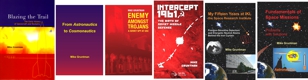 Mike's books
 Mike's rocket and space videos (>1.2×10^6 views on YouTube)
Energetic Neutral Atoms (ENA) in space: ENA Imaging of Space Plasmas ENA Tutorial ENA history Mike's ENAs Early days of ENAs
Solar System Interstellar Boundary: Mapping in ENAs and EUV Road to IBEX Interstellar Probe: Instrumentation
Low-energy ENAs Interstellar He at 1 AU SEM+CEM+MCP+PSD
USC (Trojans) USC Astronautics MS ASTE at USC Space Education Soviet Spy at USC (WWII)
History Sputnik Explorer Vanguard R-7 (SS-6, Soyuz) Neil Armstrong at USC and on the Moon
U-2 Missile defense Baikonur Tyuratam Saryshagan Astronautics Rocket equation Rocket espionage
Make the World a Better Place Sic transit gloria universitatum Socialism Rocket Scientists' Voter Guide
It is time to build a space-based missile defense layer (op-ed, 2023)
Many colleagues and friends asked me how I escaped the Soviet Union and reached the United States.
Here is part of the story about my "tunneling (effect)" transition to the land of the free and the home of the brave.
Mike Gruntman on LinkedIn Facebook YouTube in Wikipedia in Grokipedia Mike's LinkedIn articles
|
160+ problems with detailed solutions
|
 |
|
|
|
|
|
|
USC Astronautics: Mike joins USC (details) Accelerating the Future, 2002 Establishment of ASTD, 2004 ASTE 20th Anniversary, 2025 30+ Years of Master's Program
Master of Science in Astronautical Engineering (MS ASTE)
Mike's classes (in the past) at USC:
 ASTE 520 Spacecraft Design
and
ASTE 520 Spacecraft Design
and
 ASTE 575 Rocket and Spacecraft Propulsion (old ASTE 470)
|
Articles (publications) about MS ASTE
|
Int'l Astronautical Congress (2018)
|
USC Astronautics has reached national and international prominence.
In July 2026, Mike stepped down, after 30+ years, from his role in the Viterbi School of Engineering to focus on other professional and scholarly pursuits in rocketry, space, missile defense, and other endeavors.
As of 2026, Mike's Master's program (and the Department) is in an excellent shape. (See statistics in the last program's newsletter and Mike's letter to USC Astronautics instructors.)
Now, it is up to the USC Viterbi School of Engineering to either further strengthen and expand the program or let it reenter the atmosphere.
Make the World a Better Place – for conservatives and true classical (non-socialist) liberals only
Cost of Communism
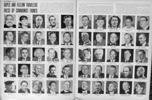
Dupes and Fellow Travelers
Munich Agreement
Two cultures and science illiteracy
Rocket espionage
Soviet espionage in U.S.
State (Bias) of U.S. Media
Freedom is not free
Marxist and Other Radical Parties
Rocket Scientists' Voter Guide for 2020s
Socialism, Academia, and Intellectuals
Sic transit gloria universitatum
Say It Right
|
|
|
|
|
|
|
|
|
|
|
|
|
|
|
AIAA Distinguished Lecture Program
|
|
|
|
|
|
|
Energetic Neutral Atom Imaging: The Next Step, 2012 (15 min video) |
|
The Cosmos of the Russian Avante-Garde
|
 Space program in Israel
Israel history (essential library)
Space program in Israel
Israel history (essential library)

|
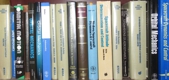
Recommended science and engineering books on astronautics, rocketry, and space technology |
Recommended books on history of astronautics, rocketry, and space |
|
USC Astronautics |


NASA Administrator Charles Bolden (left) at the 49th AIAA Aerospace Sciences Meeting in Orlando, Fla. (January 5, 2011) and Appollo astronaut Buzz Aldrin (right) at ASTE event (December 13, 2011)
|
|
|
|
More than 1,000,000 views – yes, >10^6 – on YouTube alone from 2007 to 2016
Some selected videos on satellite orbits


GPS constellation
Geostationary GEO orbit
Prograde and retrograde orbits
Molniya orbit
Effect of solar radiation on satellite orbits
Molniya communications relay
|
Recommended science and engineering books on astronautics, rocketry, and space technology |
Recommended books on history of astronautics, rocketry, and space |


Blazing the
Trail: The Early History of Spacecraft and Rocketry,
AIAA, Reston, Va., 2004
Winner of the Luigi Napolitano Award (2006) from
the International Academy of Astronautics
available at 800+ libraries worldwide
From Astronautics to Cosmonautics,
Space Pioneers Robert Esnault-Pelterie and Ary Sternfeld,
Booksurge, North Charleston, S.C., 2007
Nominated (2008) for the Emme Award of
the American Astronautical Society
Enemy Amongst Trojans. A Soviet Spy at USC,
Figueroa Press, Los Angeles, Calif., 2010


Intercept 1961. The Birth of Soviet Missile Defense,
AIAA, Reston, Va., 2015
available at 450+ libraries worldwide
My Fifteen Years at IKI, the Space Research Institute:
Position-Sensitive Detectors and Energetic Neutral Atoms Behind the Iron Curtain
,
Interstellar Trail Press, 2022
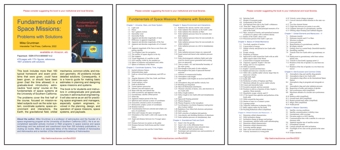
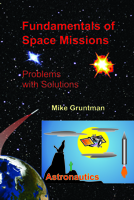
Fundamentals of Space Missions:
Problems with Solutions
,
Interstellar Trail Press, 2007
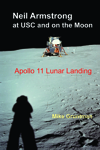
Neil Armstrong at USC and on the Moon:,
Apollo 11 Lunar Landing,
Interstellar Trail Press, Los Angeles, 2025
Space Education
The acute need to improve space-related education has emerged as a major challenge for the American space enterprise. At the same time, the importance of space continues to grow for national security and economy. The United States depends on space assets more than any other nation on earth and this country leads the world in exploration and utilization of space.
Government, Congress, and industry have produced alarming reports on the state of the American space workforce during last two decades. Whether these findings collect dust on library shelves or translate into changes depend on a concerted effort by all stakeholders, including the space industry, government, academia, and professional societies, especially the American Institute of Aeronautics and Astronautics (AIAA).
To meet the challenge, Mike Gruntman founded the Astronautics Program at the University of Southern California (USC) in the mid-1990s. Already in 2002, the University noted that "his knowledge, vision, energy, exuberance, and effort have built innovative and successful degree programs in Astronautics, turn[ed] around the aerospace program at USC, which had undergone economy-related retrenchment in the early 1990s."
Mike served as the founding chairman of a new space-focused Department of Astronautical Engineering (ASTE) at USC from 2004-2007 and guided its spectacular growth. Mission accomplished! This is a unique development in space engineering education in the United States, and this is a unique department. He chaired the department again from 2016–2019. In 2024, the University celebrated the 20th anniversary of the Astronautical Engineering Department. Since the early 2000s, Mike has been calling for creation of independent academic departments in space engineering in U.S. universities.
USC Astronautics: Mike joins USC (details) Accelerating the Future, 2002 Establishment of ASTD, 2004 ASTE 20th Anniversary, 2025 30+ Years of Master's Program
Mike has been leading, single-handedly and without interruption, the program's nationally and internationally prominent flagship component, Master of Science in Astronautical Engineering (MS ASTE), since the mid-1990s (pdf; video). During the first 22 years of the new department (2014-2026), it awarded nearly 1200 degrees Master of Science in Astronautical Engineering, a significant contribution to the workforce development of space and defense industries of the United States and national security and economic prowess of the country. Many students graduated with Bachelor's and PhD degrees as well. Mike's graduate course on space systems was among largest in this engineering field in the country. Nearly 2600 graduate students took this class from 1994-2026. Mike also teaches short courses on fundamentals of space systems for government and industry.
USC Astronautics has reached national and international prominence.
In July 2026, Mike stepped down, after 30+ years, from his role in the Viterbi School of Engineering to focus on other professional and scholarly pursuits in rocketry, space, missile defense, and other endeavors.
As of 2026, Mike's Master's program (and the Department) is in an excellent shape. (See statistics in the last program's newsletter and Mike's letter to USC Astronautics instructors.)
Now, it is up to the USC Viterbi School of Engineering to either further strengthen and expand the program or let it reenter the atmosphere.
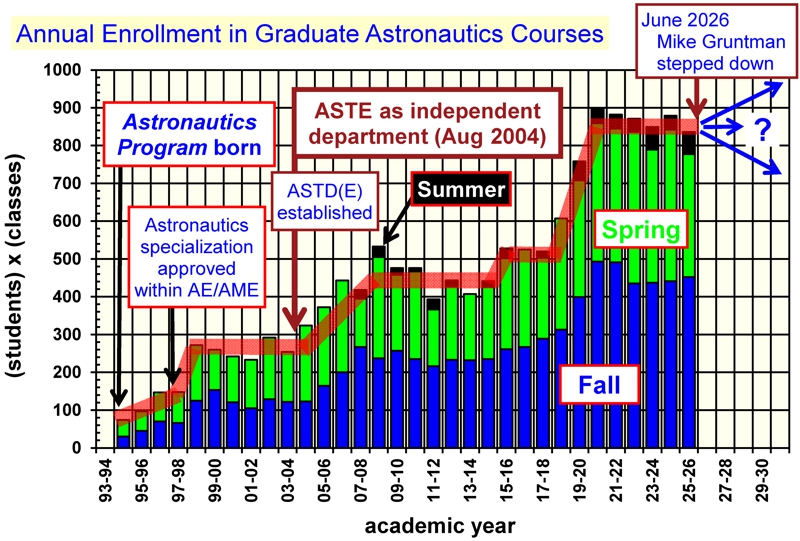
This enrollment chart is based on the data in public domain. Each class is 3 units. One multiplies the number of units by the cost of a single graduate class unit in VSOE ($2,665 for one unit - $7,995 for a 3-unit course - in academic year 2025-2026) to estimate the program tuition revenues.
 A recent (2022)
book includes more than 160 problems with detailed solutions
from this university course (and enhancing short courses for government and industry).
A recent (2022)
book includes more than 160 problems with detailed solutions
from this university course (and enhancing short courses for government and industry).
The journey continues – Ad Astra!
 Energetic Neutral Atoms (ENA) in Space
–
astronauticsnow.com/ENA/
Energetic Neutral Atoms (ENA) in Space
–
astronauticsnow.com/ENA/
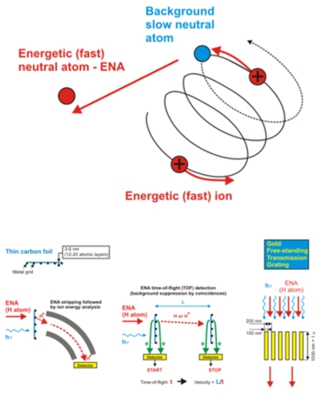
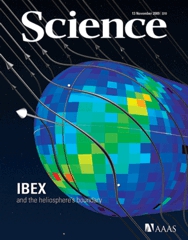
Measurement of energetic neutral atoms (ENA) in space has emerged as a powerful tool to remotely probe hot plasmas and populations of energetic ions such as planetary magnetospheres and the interstellar (galactic) boundary of the heliosphere. The original bold vision of ENA imaging emerged in the late 1970s. About 20 years of concept refinement and development of enabling instrumentation followed to overcome measurement challenges. Mike Gruntman played a leading role in this development. NASA's IMAGE mission successfully demonstrated the instrumentation and the power of the experimental concept by imaging Earth's magnetosphere and Cassini imaged the magnetosphere of Saturn in ENA fluxes. Two ENA imagers are launched in 2007 and 2008 on the NASA TWINS mission to conduct, for the first time, stereoscopic imaging of the Earth magnetosphere. NASA's IBEX mission, launched in 2008, mapped for the first time the interstellar (galactic) frontier of the solar system in ENA fluxes. The Science magazine highlighted IBEX discoveries on its cover in November 2009.
 Energetic Neutral Atom Imaging: The Next Step, 2012 (15 min video)
 The journey to ENA imaging began in the mid 1970s
Among Mike's main contributions to ENA and EUV imaging are
(a) discovery (1982) of the disturbance of the supersonic interstellar wind by the neutral solar wind flux (pdf) – the effect that is today routinely accounted for in global heliospheric models and possibly contributing to the yet unexplained heliospheric ribbon;
(b) prediction (1992) of the anisotropy of heliospheric ENA fluxes, the effect that has enabled heliosphere ENA imaging (pdf) – first implemented and demonstrated by IBEX;
(c) part of effort (2001) in definitive formulation of the concept of heliosphere boundary ENA imaging in an article in the Journal of Geophysical Research (pdf) – a key to proposing the winning science objectives for the IBEX mission;
(d) experimental demonstration (1981) of ENA detection with energies down to 0.5 keV (1.5 orders of magnitude down from the lowest energies of >20 keV at the time) using thin foils ans start-stop time-of-flight (TOF) techniques (pdf) – the breakthrough technique that enabled ENA imaging instruments on the IMAGE (MENA) and TWINS missions;
(e) experimental demonstration (1981) of measuring absolute particle detection efficiency without calibration (pdf) – the technique that is used on IBEX (IBEX-Hi);
(f) spearheading the effort to formulate and propose the first dedicated ENA space experiment and building the first generation ENA instruments (early and mid-1980s) to detect the neutral component of the solar wind and heliospheric ENA fluxes from the interstellar boundary of the solar system (pdf) – the flight experiment (experiment GAS njointly with MPAe and CBK, instruments GAS-1, GAS-2, GAS-3, and block GAS-E) was built but never flown in space due to "political" headwinds (first scheduled for ill-fated Phobos mission to be launched in 1986 and then removed and rescheduled for never-launched Relikt-2; two Phobos spacecreaft were launched in 1988 and were lost); IBEX measured for the first time heliopsheric ENAs in 2009; the neutral solar wind (pdf) is yet to be observed experimentally;

(g) developing a concept (1981) and demonstrating (1995) suppression of UV and EUV background photon fluxes (main contributors to signal noise) in ENA instruments by diffraction filtering (pdf); – the technique that enabled ENA imaging instruments on the IMAGE (MENA) and TWINS missions;
(h) proposing (1983) and developing in detail (1991) a concept of the unique technique for detection of low-energy neutral atoms by their surface cionversion to negative ions (pdf); – the technique that enabled low-energy ENA imaging on the IMAGE (LENA) and IBEX (IBEX-Lo) missions;
(i) development of the concept (1998) of EUV mapping of the heliopause (pdf);
(j) development of the concept of and demonstrating a breakthrough enabling design (2005) of an instrument for EUV mapping of the three-dimensional solar wind and the heliopause (pdf);
(k) ruling out (1993) use of coded-apertures for ENA imaging of the magnetosphere (pdf).
Mike's 1997 review article on imaging of space plasmas in ENA fluxes remains to this day a main publication in the field.
 About Mike Gruntman
Dr. Mike Gruntman is professor of astronautics and professor of aerospace engineering at the University of Southern California (USC). He is the founder of the USC Astronautics Program. Mike served the first (founding) Chairman (2004–2007) of the USC Department of Astronautical Engineering and chaired the department again from 2016–2019. Mike is involved in a number of research and development programs in space science and space technology. He authored and co-authored more than 300 scholarly publications, including 7 books, in the areas of astronautics, space physics, space technology, scientific instrumentation, space sensors, rocketry, history of space, rocketry, and missile defense, and astronautical education.
History – astronauticsnow/history
Various events, documents, and publications related (and a very few unrelated) to history of spacecraft and rocketry.
Public policy. Copyright © 2004–2016. All rights reserved.